Norman O. Stone and Ella A. Stone Memorial Fund · The Cleveland Museum of Art
Image: public domain (CC0) · Museum record & image source ↗
Mother and Child
- Date
- c. 1915–1955
- Medium
- woodcut
- Dimensions
- Not listed
- Country / context
- Japan
- Movement / tradition
- Sosaku-hanga · Source ↗
- Collection
- The Cleveland Museum of Art
- Pathway
- Japanese art and printmaking ↗
Kōshirō Onchi was a key figure in the sōsaku-hanga movement. He not only provided essential aesthetic and spiritual leadership, but his aristocratic background made him a forceful advocate of printmaking within the hostile bureaucracy of Japan's hierarchical art world. Onchi admired the nonobjective images of Russian artist Wassily Kandinsky and the Expressionist style of the Norwegian artist Edvard Munch, whose works shared a kinship with his own interests in the expressive power of nonrepresentational and abstracted figural compositions as well as color. Onchi was particularly attracted to the medium of woodcut in which he felt he was forced to simplify his forms and thus intensify the expression of his emotion while cutting, gouging, and scraping the image into the block.
Collection text · The Cleveland Museum of Art · CC0Start with what you can see: shapes, surface, colour and scale. How might the listed materials affect the way this object was made and experienced?
Looking prompt · an invitation to observe, not a historical interpretation.Follow a connection.
Explore the tradition ↗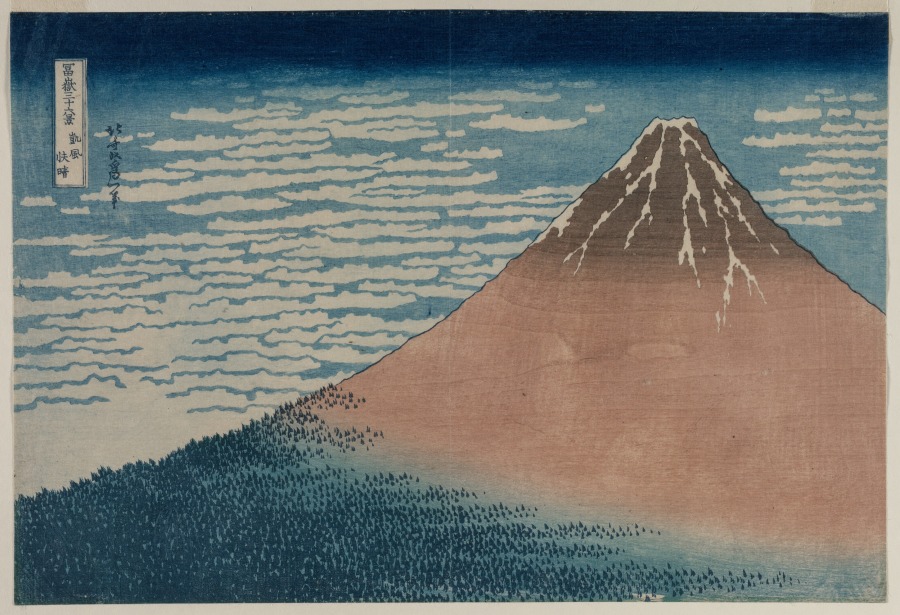 ↗
South Wind, Clear Sky, from Thirty-Six Views of Mount Fuji
Katsushika Hokusai
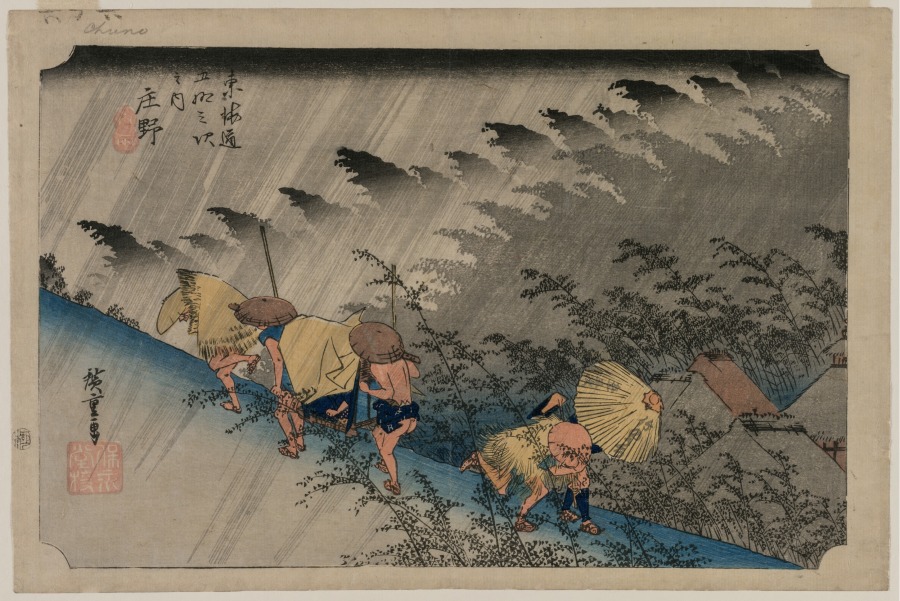 ↗
Driving Rain at Shōno, from Fifty-Three Stations of the Tokaidō
Utagawa Hiroshige
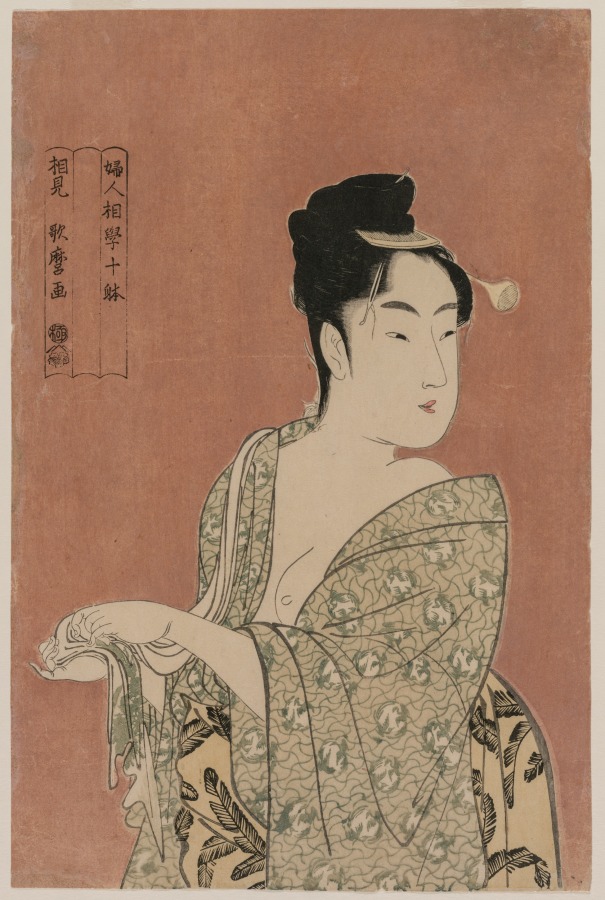 ↗
The Flirtatious Type, from Ten Types in the Physiognomy of Women
Kitagawa Utamaro
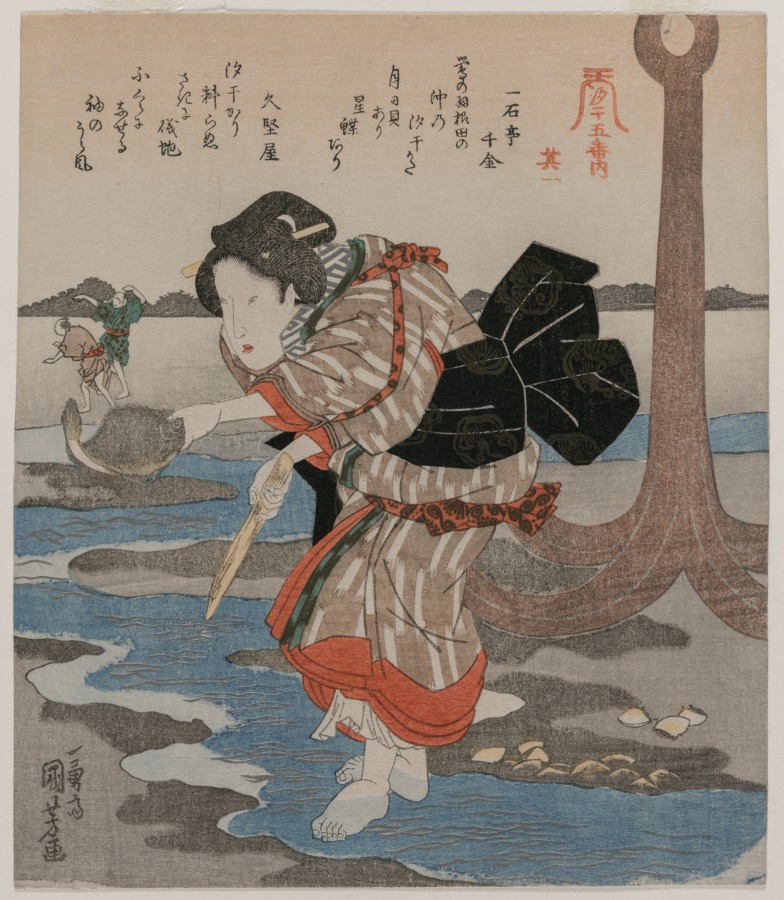 ↗
A Low Tide Pentaptych
Utagawa Kuniyoshi