c. 1905–1930
Dates overlap and vary by place; they are not strict boundaries.
Movement
A movement, period and school are different kinds of historical grouping.
Associations are checked against museum records rather than assigned from dates alone.
Why it emerged
Rapid urbanisation and dissatisfaction with conventional art helped spur groups such as Die Brücke, founded in Dresden in 1905, and Der Blaue Reiter in Munich in 1911. Artists used distortion, colour and printmaking to explore inner experience, social tension or spiritual renewal. Expressionism includes distinct programmes, with war later transforming many artists’ outlooks.
Key artists and contributions
Ernst Ludwig Kirchner
Used angular figures and crowded streets to make urban encounters feel unstable.
Wassily Kandinsky
Connected colour and form with spiritual ideas while developing abstraction.
Gabriele Münter
Used simplified contours and emphatic colour in portraits, interiors and landscapes.
What changed afterwards
Expressionist painting and woodcuts enlarged the language available for political printmaking and later expressive art. Nazi authorities condemned many such works as “degenerate”; their suppression and later recovery also shaped how the movement entered museums.
Sources and further reading
Original educational overview, informed by the resources below. Artist examples are selective; they are not a complete membership list.
Works in this collection
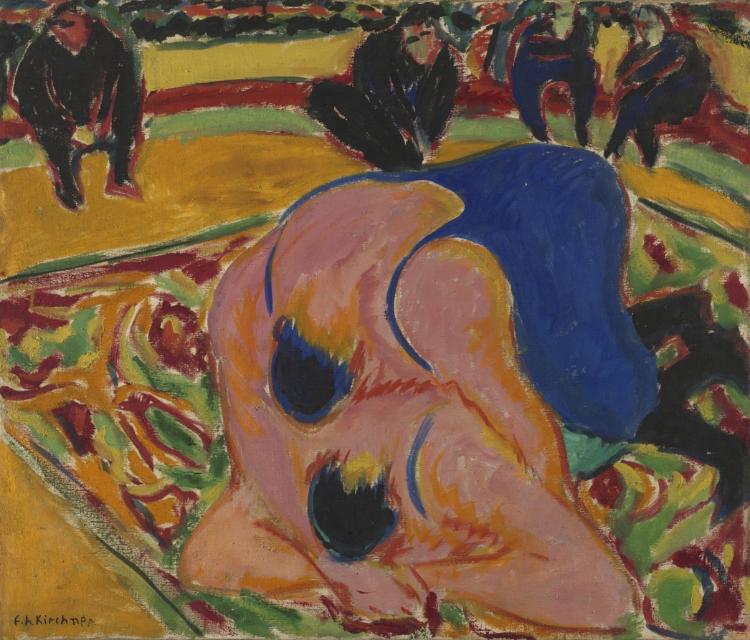 ↗
Wrestlers in a Circus
Ernst Ludwig Kirchner
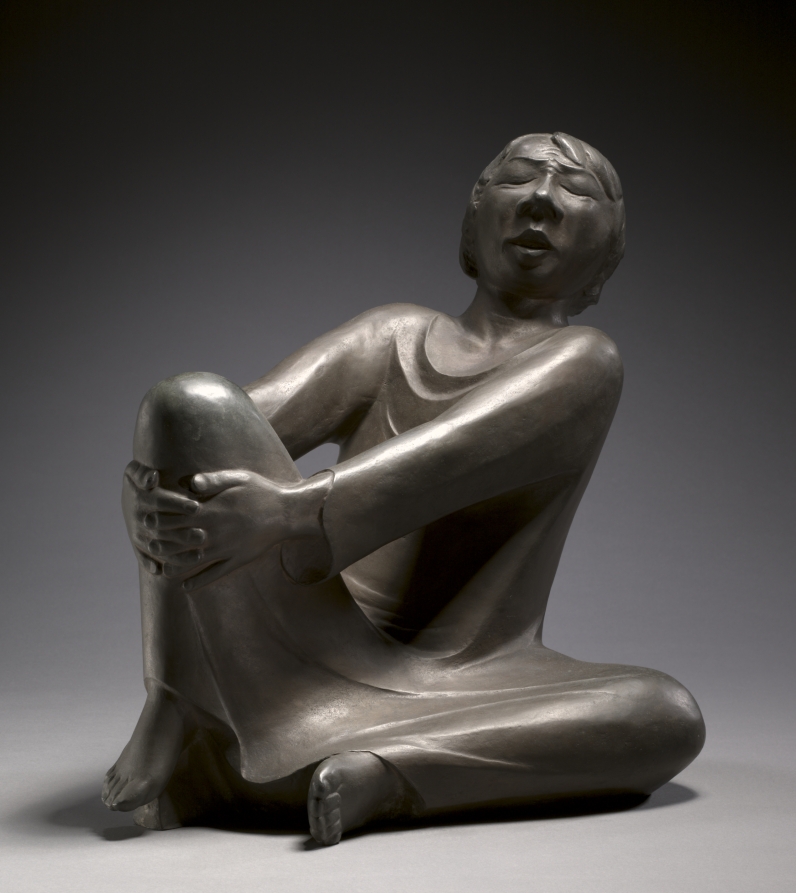 ↗
Singing Man
Ernst Barlach
Movement and school labels are interpretive tools. Individual works can cross boundaries, and an artist’s entire career is not assigned to a single movement.