c. 1840–1880
Dates overlap and vary by place; they are not strict boundaries.
Movement
A movement, period and school are different kinds of historical grouping.
Associations are checked against museum records rather than assigned from dates alone.
Why it emerged
In mid-nineteenth-century France, industrialisation and the upheavals around 1848 sharpened attention to class and ordinary work. Realist artists challenged the academic preference for idealised history and mythology. Painting contemporary people on a large scale raised a political question: whose experience deserved public visibility?
Key artists and contributions
Gustave Courbet
Gave provincial lives the scale and seriousness previously associated with history painting.
Jean-François Millet
Made rural labour a major subject without erasing its physical demands.
Honoré Daumier
Used caricature and painting to scrutinise politics, urban life and social inequality.
What changed afterwards
Realism helped legitimise contemporary life as a subject for Impressionism and later socially engaged art. Its images are constructed arguments rather than neutral photographs: viewpoint, scale and selection always shape what appears truthful.
Sources and further reading
Original educational overview, informed by the resources below. Artist examples are selective; they are not a complete membership list.
Works in this collection
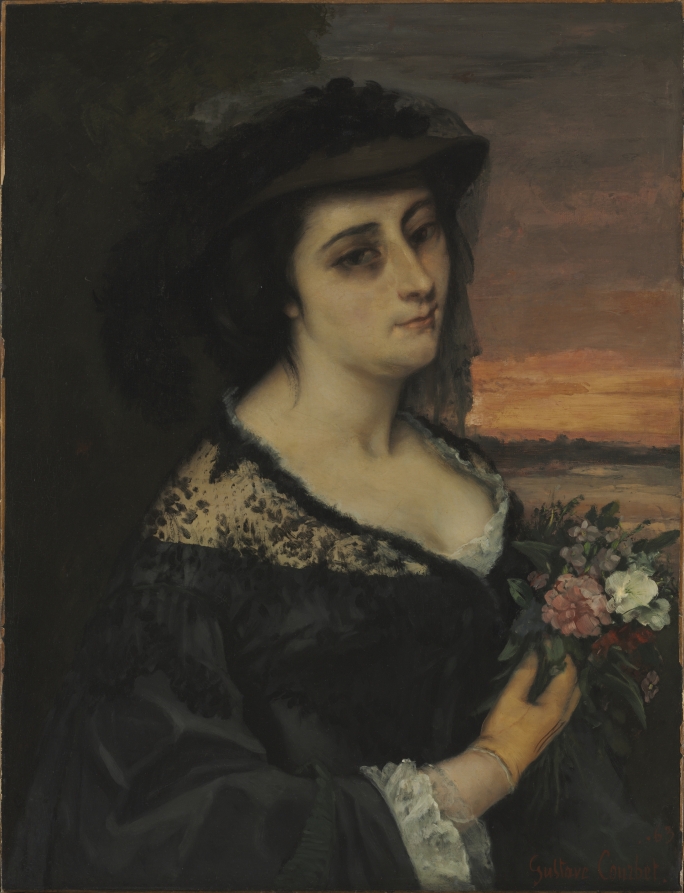 ↗
Mme L . . . (Laure Borreau)
Gustave Courbet
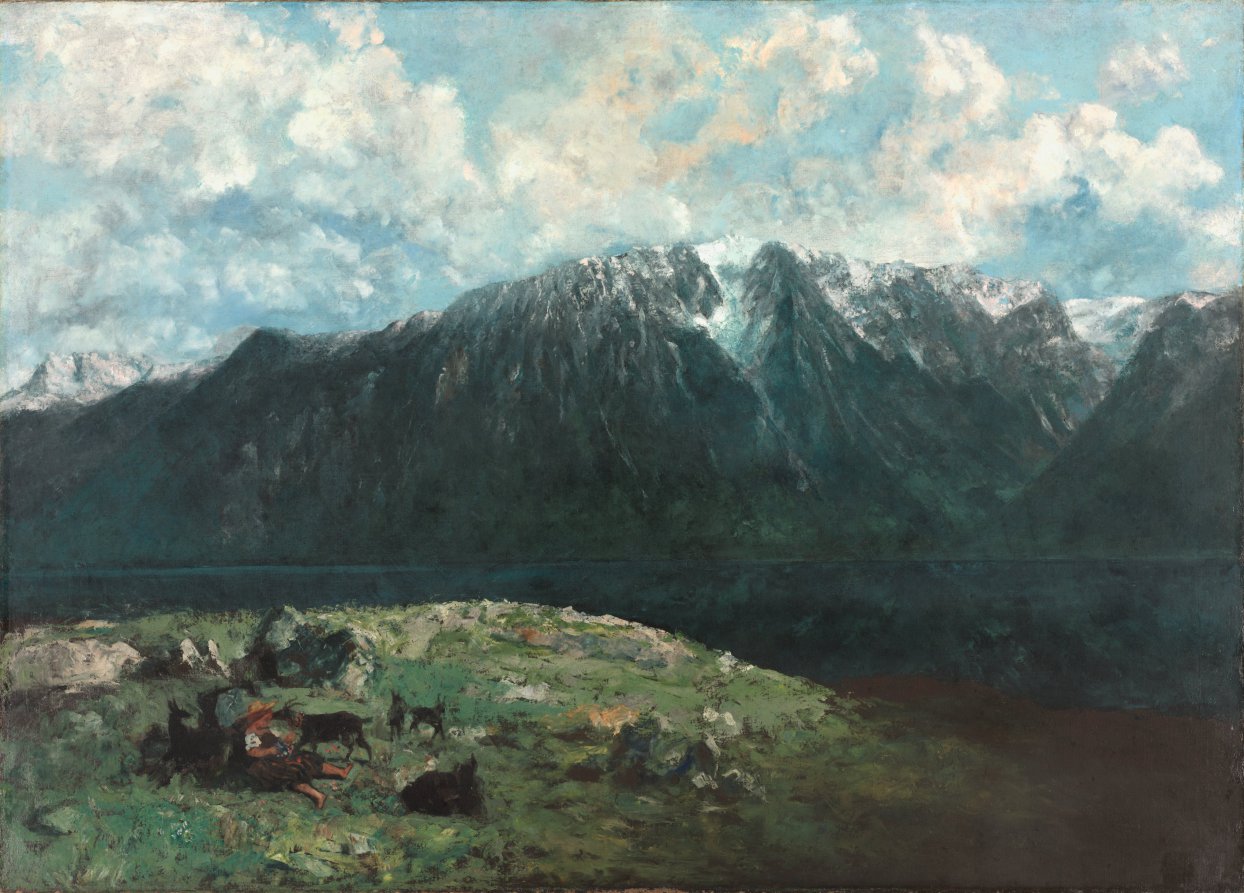 ↗
Panoramic View of the Alps, Les Dents du Midi
Gustave Courbet
Movement and school labels are interpretive tools. Individual works can cross boundaries, and an artist’s entire career is not assigned to a single movement.