Life and career
Hiroshige worked in Edo’s commercial publishing world, making famous places, travel and weather central to his prints. His Tōkaidō series established his reputation in the 1830s. Later series revisited Edo and Mount Fuji through increasingly adventurous framing; publishers, carvers and printers helped realise these designs.
Works across a career
Selected examples, not a complete catalogue. Read date ranges and attributions before inferring a career sequence.
- 01
late 1830s or early 1840s
late 1830s or early 1840s
Picture of Light Rain on the Embankment of the Sumida River, from the series A New Selection of Famous Places in Edo
- Material / technique
- color woodblock print
- Attribution / role
- Museum attribution
- Collection / source
- The Cleveland Museum of Art
- 02
c. 1831
c. 1831
Full Moon over Takanawa, from the series Famous Places in the Eastern Capital
- Material / technique
- color woodblock print
- Attribution / role
- Museum attribution
- Collection / source
- The Cleveland Museum of Art
- 03
1858
1858
Pine Groves of Miho in Suruga, from the series Thirty-six Views of Mount Fuji
- Material / technique
- Color woodblock print, ink and color on paper
- Attribution / role
- Museum attribution
- Collection / source
- The Cleveland Museum of Art
Compare materials, style and colour
The moonlit view, rainy embankment and late Fuji scene use the same printing family but organise atmosphere differently. Compare dark silhouettes, thin rain lines and the spacing of distant forms. Colour belongs to a particular impression: fading and printing variations can alter the palette you see today.
Material
What can this material do? Distinguish a design, an original object and a later impression or cast.
Style
Compare viewpoint, edges, composition and marks. Which choices persist, and which change?
Colour
Compare palette, contrast and light. Consider the support, printing, surface treatment and ageing.
Sources and further reading
Original educational interpretation; catalogue descriptions are separately credited. Each study links to its source. Reference entries without images are not added to the comparison timeline.
More works in this collection
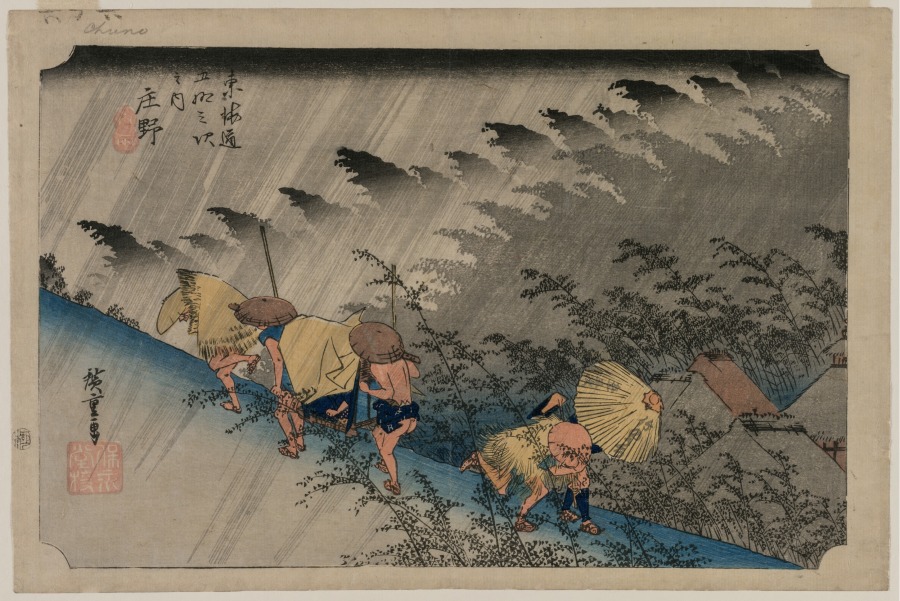 ↗
Driving Rain at Shōno, from Fifty-Three Stations of the Tokaidō
Utagawa Hiroshige
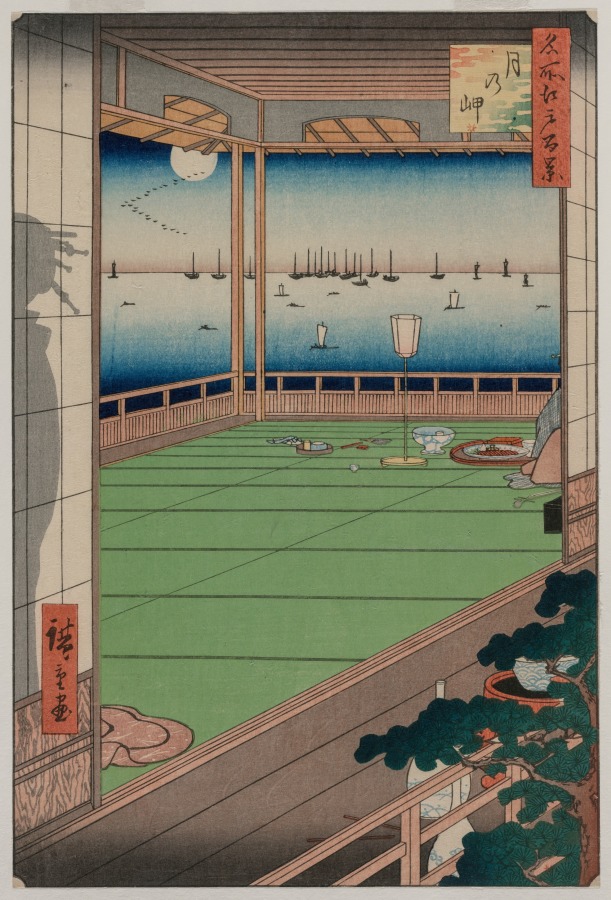 ↗
The Moon-Viewing Promontory, from One Hundred Views of Famous Places in Edo
Utagawa Hiroshige
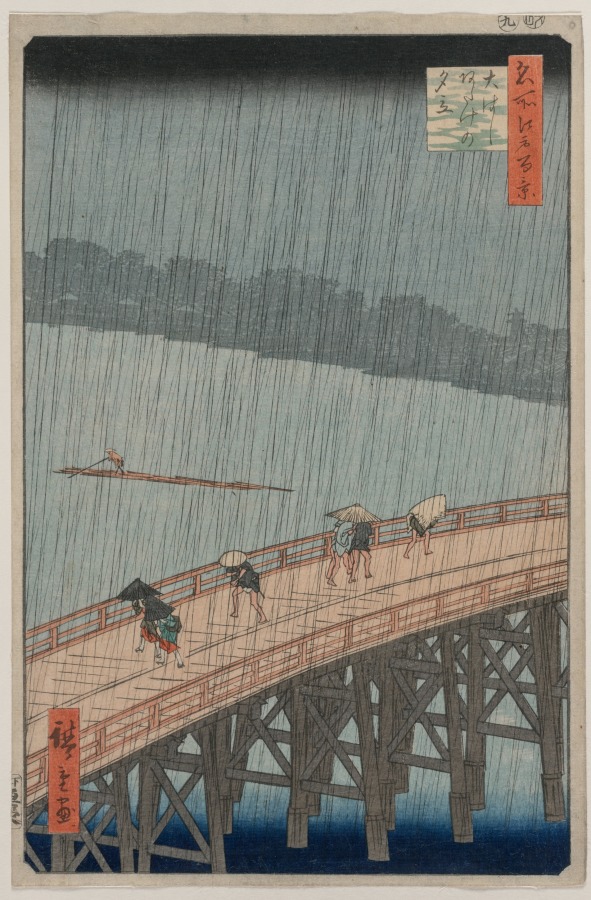 ↗
Sudden Shower over Shin-Ōhashi Bridge and Atake, from One Hundred Famous Views of Edo
Utagawa Hiroshige