c. 1790–1850
Dates overlap and vary by place; they are not strict boundaries.
Movement
A movement, period and school are different kinds of historical grouping.
Associations are checked against museum records rather than assigned from dates alone.
Why it emerged
Revolution, the Napoleonic wars and industrial change unsettled European ideas of progress. Artists explored intense feeling, dangerous nature, history and individual imagination. Romanticism took different national forms and often overlapped with Neoclassicism; its fascination with distant places could also reproduce colonial fantasies rather than describe lived realities.
Key artists and contributions
Eugène Delacroix
Made colour, energetic composition and contemporary conflict central to ambitious painting.
J. M. W. Turner
Used atmospheric light to explore natural forces and a changing industrial world.
Caspar David Friedrich
Used contemplative figures and landscapes to explore spiritual and psychological questions.
What changed afterwards
Its expressive colour and investment in subjectivity supplied resources for Symbolism and later expressionist practices. Landscape could become a site of political identity or inner experience, rather than merely a record of scenery.
Sources and further reading
Original educational overview, informed by the resources below. Artist examples are selective; they are not a complete membership list.
Works in this collection
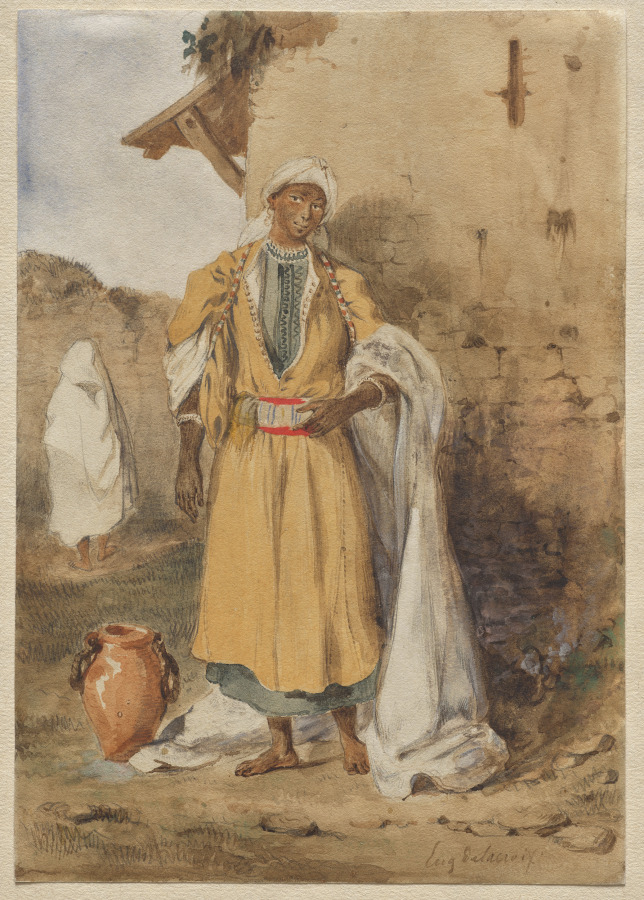 ↗
A Young Black Woman Fetching Water
Eugène Delacroix
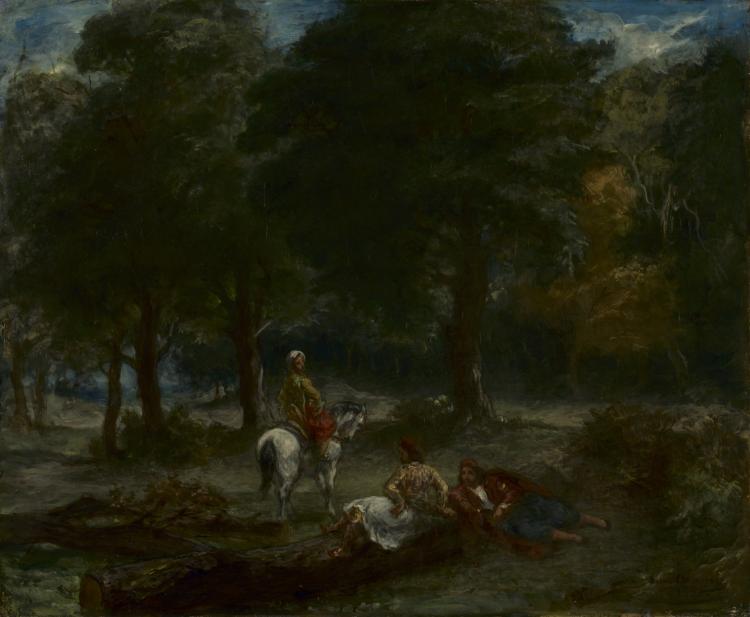 ↗
Greek Cavalry Men Resting in Forest
Eugène Delacroix
Movement and school labels are interpretive tools. Individual works can cross boundaries, and an artist’s entire career is not assigned to a single movement.