Life and career
Toyokuni was an important Utagawa-school designer whose actor images helped shape the visual culture of kabuki celebrity. He also designed scenes of fashionable women and urban leisure. His name continued through later successors, so an attribution to Toyokuni I should not be confused with every later use of the name.
Works across a career
Selected examples, not a complete catalogue. Read date ranges and attributions before inferring a career sequence.
- 01
c. 1790
c. 1790
Courtesans Promenading on the Nakanochō
- Material / technique
- triptych of color woodblock prints
- Attribution / role
- Museum attribution
- Collection / source
- The Cleveland Museum of Art
Museum catalogue note
Nakanochō was the main street in Yoshiwara, a famous walled pleasure district that housed as many as 4,000 courtesans. In the early evening, elaborately dressed courtesans accompanied by attendants promenaded on the central thoroughfare, as in this scene. The open buildings with shop curtains hanging from their eaves are teahouses, establishments where men could arrange appointments with courtesans of the more prestigious brothels.
Collection text · The Cleveland Museum of Art · CC0 - 02
c. 1797
c. 1797
Kataoka Nizaemon VII and Ichikawa Yaozo III in a Confrontation Beside a Waterfall
- Material / technique
- color woodblock print
- Attribution / role
- Museum attribution
- Collection / source
- The Cleveland Museum of Art
- 03
1811
1811
Cooling Off at Ryōgoku Bridge in Edo, a Pentaptych (Edo Ryôgoku suzumi no zu, gomai tsuzuki)
- Material / technique
- Pentaptych of color woodblock prints
- Attribution / role
- Museum attribution
- Collection / source
- The Cleveland Museum of Art
Compare materials, style and colour
Follow the shift from a procession around 1790 to the tense theatrical confrontation of 1797 and the broad riverside gathering of 1811. Colour prints can isolate a recognisable actor or distribute attention across many figures. Multi-sheet format changes how the eye travels without changing the basic relief-printing process.
Material
What can this material do? Distinguish a design, an original object and a later impression or cast.
Style
Compare viewpoint, edges, composition and marks. Which choices persist, and which change?
Colour
Compare palette, contrast and light. Consider the support, printing, surface treatment and ageing.
Sources and further reading
Original educational interpretation; catalogue descriptions are separately credited. Each study links to its source. Reference entries without images are not added to the comparison timeline.
More works in this collection
 ↗
Cherry Blossoms in the Wind
Utagawa Toyokuni
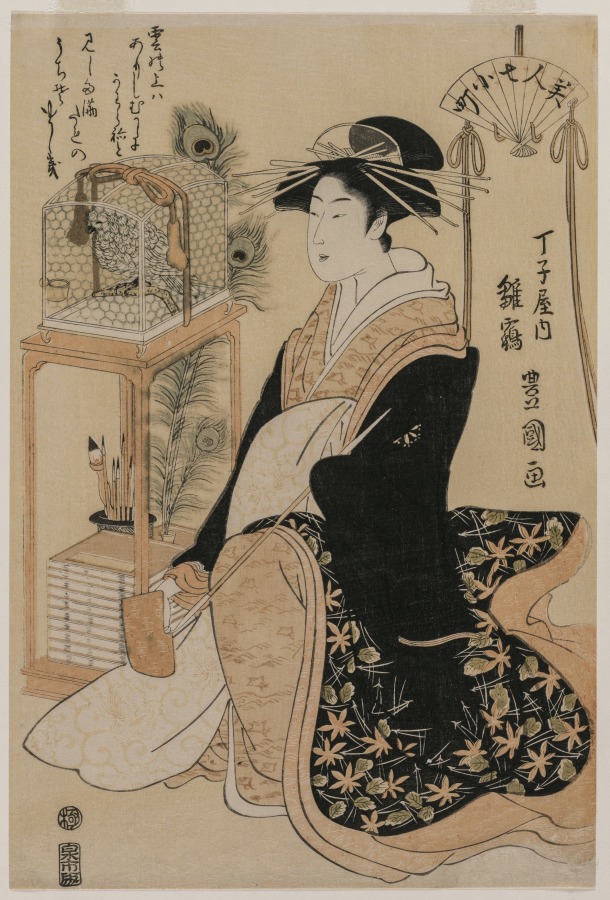 ↗
Hinazura of Chōjiya from the series Beauties as the Seven Komachi
Utagawa Toyokuni
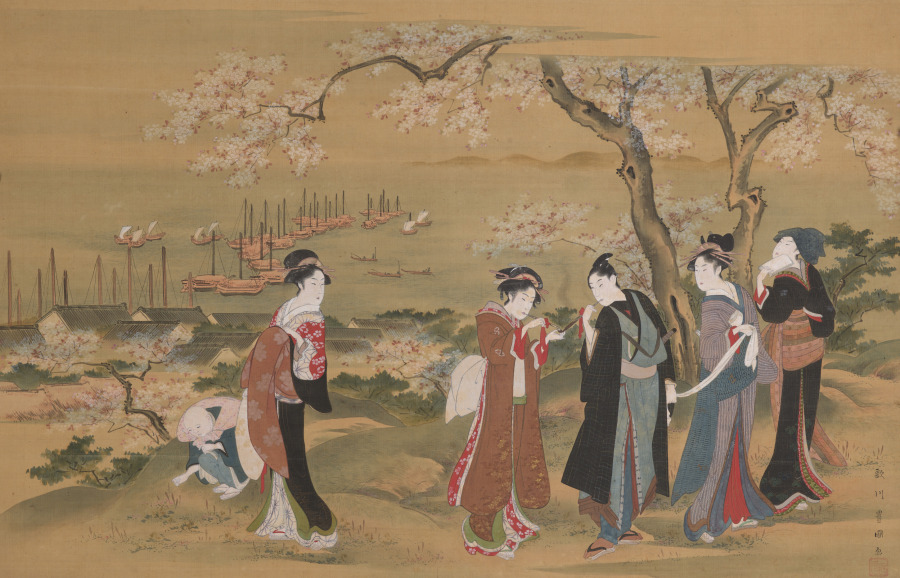 ↗
Viewing Cherry Blossoms at Gotenyama
Utagawa Toyokuni