 ↗
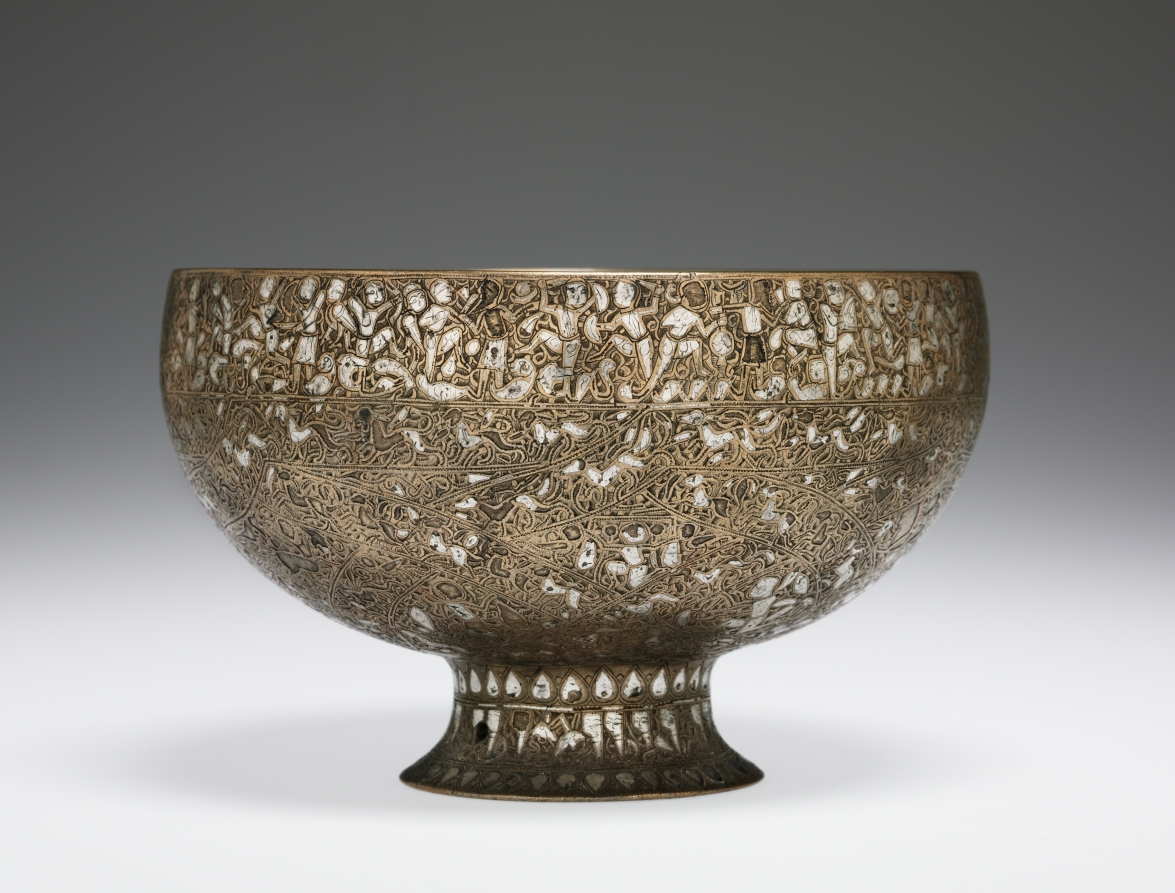
Iran, Seljuq period of Iran (1037–1194) · 1200–1221
The Wade Cup with Animated Script
Creator not recorded
Leonard C. Hanna Jr. Fund · The Cleveland Museum of Art
Image: public domain (CC0) · Museum record & image source ↗
Creator not recorded by the museum
When members of the royal family or priesthood traveled in a public festival procession or to a temple to make offerings or participate in a ceremony, they would be carried in a palanquin, or a covered litter. Portable objects of veneration, such as bronze images or a sacred fire, were also carried on palanquins. The palanquins had wooden poles, hanging seats or raised platforms, and bronze fittings cast in intricate forms and gilt, lending the palanquins a sumptuous quality.The royal palanquins were typically fitted with multiheaded, serpent-shaped finials at the ends of the poles and corners of the elevated platforms. Naga means serpent in Sanskrit, a language from India selectively appropriated by the Khmer in Cambodia. In their own indigenous mythology, the Khmer people trace their descent from a naga princess and a prince from the island of Java who journeyed to Cambodia. The naga remains a potent emblem for the Khmer nation to this day; it is ubiquitous on Cambodian monuments.
Collection text · The Cleveland Museum of Art · CC0Start with what you can see: shapes, surface, colour and scale. How might the listed materials affect the way this object was made and experienced?
Looking prompt · an invitation to observe, not a historical interpretation.↗Creator not recorded
 ↗
Creator not recorded
 ↗
Creator not recorded
 ↗
Creator not recorded