 ↗
Iran, Seljuq period of Iran (1037–1194) · 1200–1221
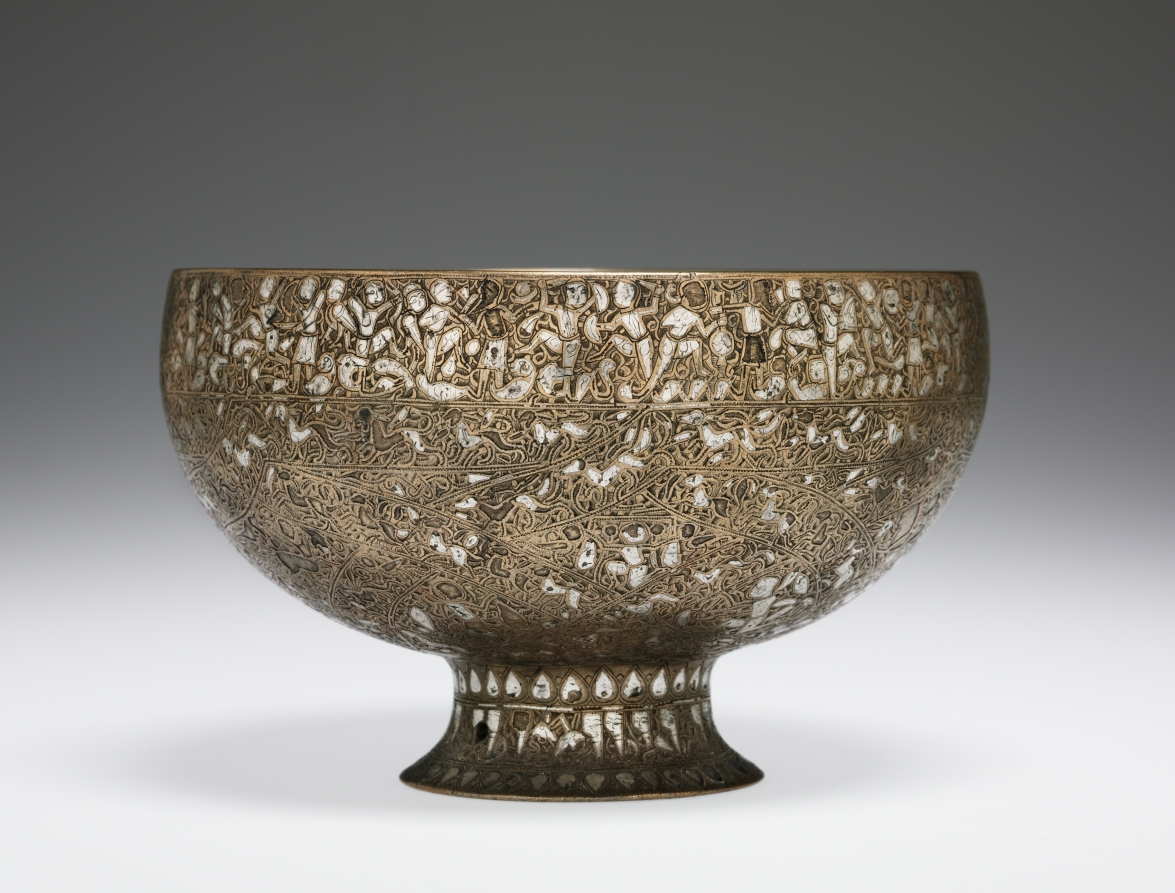
The Wade Cup with Animated Script
Creator not recorded
John L. Severance Fund · The Cleveland Museum of Art
Image: public domain (CC0) · Museum record & image source ↗
Creator not recorded by the museum
In Iran during the 1000s and 1100s, vessels in the shape of animals gained popularity, especially as incense burners. Felines were favored in Persian art and this piece may represent a caracal, a type of lynx. The head of the creature was cast separately and is removable to fill its body with hot coals and incense. Qur’anic verses on the neck and spine remind worshippers to set work aside, attend prayer, and then disperse to seek God’s bounty. The diffusion of perfumed smoke through the burner’s pierced palmette design may have served as a sensorial reminder of this teaching.
Collection text · The Cleveland Museum of Art · CC0Start with what you can see: shapes, surface, colour and scale. How might the listed materials affect the way this object was made and experienced?
Looking prompt · an invitation to observe, not a historical interpretation.↗Creator not recorded
 ↗
Creator not recorded
 ↗
Creator not recorded
 ↗
Creator not recorded