 ↗
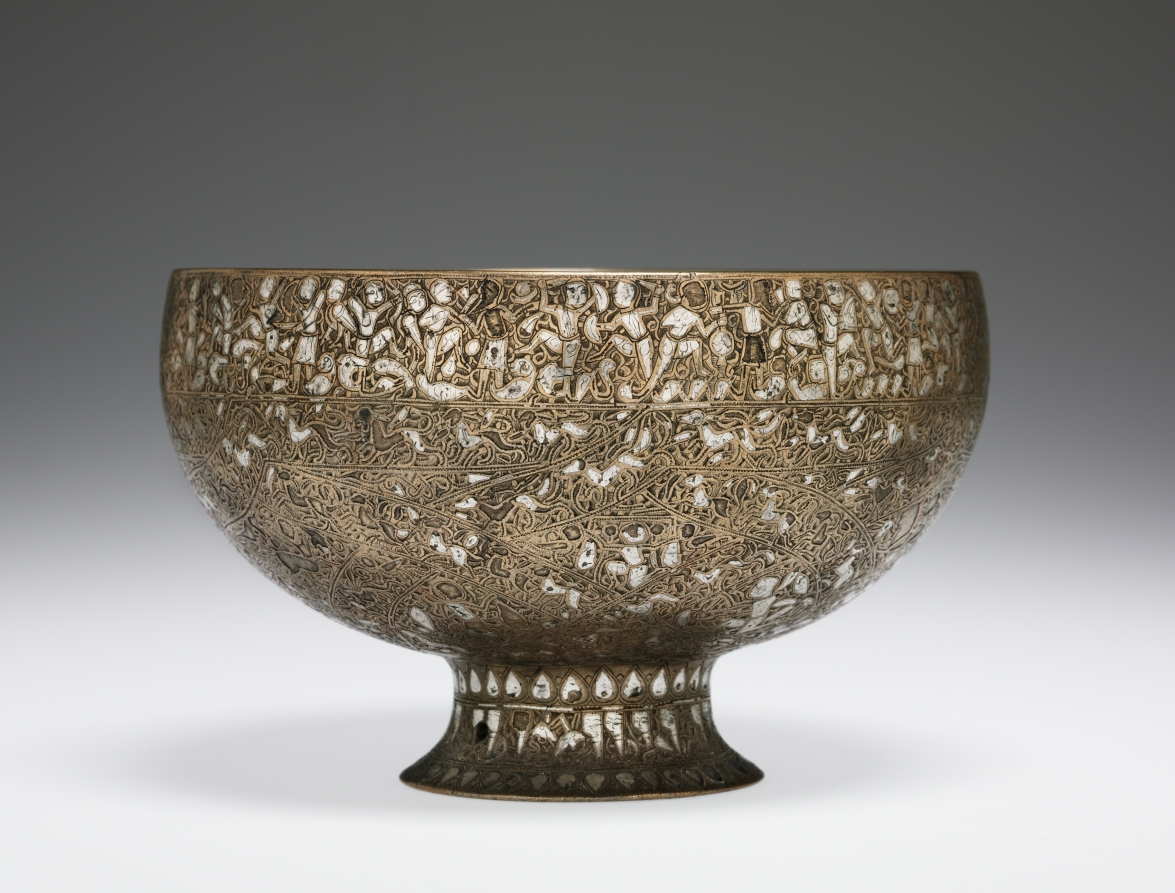
Iran, Seljuq period of Iran (1037–1194) · 1200–1221
The Wade Cup with Animated Script
Creator not recorded
Purchase from the J. H. Wade Fund · The Cleveland Museum of Art
Image: public domain (CC0) · Museum record & image source ↗
Creator not recorded by the museum
In this cast bronze cheekpiece, a horned male figure with sidelocks grabs two winged felines by their forelegs. Each feline tramples a rabbit beneath its feet. This design is an ancient Near Eastern motif known as the Master of Animals. Incised chevrons, lines, and crosses decorate the master and the winged felines. A ring penetrating the male figure’s torso provides a means of attachment for a metal horse bit, now missing, and a second cheekpiece, likely nearly identical. This work likely originates from Luristan, a region in northwestern Iran known for its metalworking and horse-breeding in the Iron Age.
Collection text · The Cleveland Museum of Art · CC0Start with what you can see: shapes, surface, colour and scale. How might the listed materials affect the way this object was made and experienced?
Looking prompt · an invitation to observe, not a historical interpretation.↗Creator not recorded
 ↗
Creator not recorded
 ↗
Creator not recorded
 ↗
Creator not recorded