c. 1880–1910
Dates overlap and vary by place; they are not strict boundaries.
Suggestion instead of explanation
Myth, dream and poetry let images imply an inner experience. Meaning often remains open; a strange flower or hybrid creature need not have one fixed dictionary definition.
Associations are checked against museum records rather than assigned from dates alone.
Why it emerged
Late-nineteenth-century writers and artists questioned the idea that visible facts alone could express human experience. Poetry, myth, spiritual inquiry and dreams offered alternatives to materialism and naturalistic description. Symbolism linked diverse international practices through suggestion and inner experience rather than one consistent painting technique.
Key artists and contributions
Gustave Moreau
Reworked myth and biblical narrative into densely suggestive, jewel-like visions.
Odilon Redon
Used strange hybrid forms and later luminous colour to evoke imagination rather than explain it.
Edvard Munch
Made love, anxiety and mortality visible through charged figures and simplified settings.
What changed afterwards
Symbolist methods helped loosen the bond between colour and literal description, offering resources for Expressionism and abstraction. Surrealist artists later pursued dreams differently, but inherited an expanded sense of what an image could suggest.
Sources and further reading
Original educational overview, informed by the resources below. Artist examples are selective; they are not a complete membership list.
Works in this collection
 ↗
Portrait of a Woman
Edmond François Aman-Jean
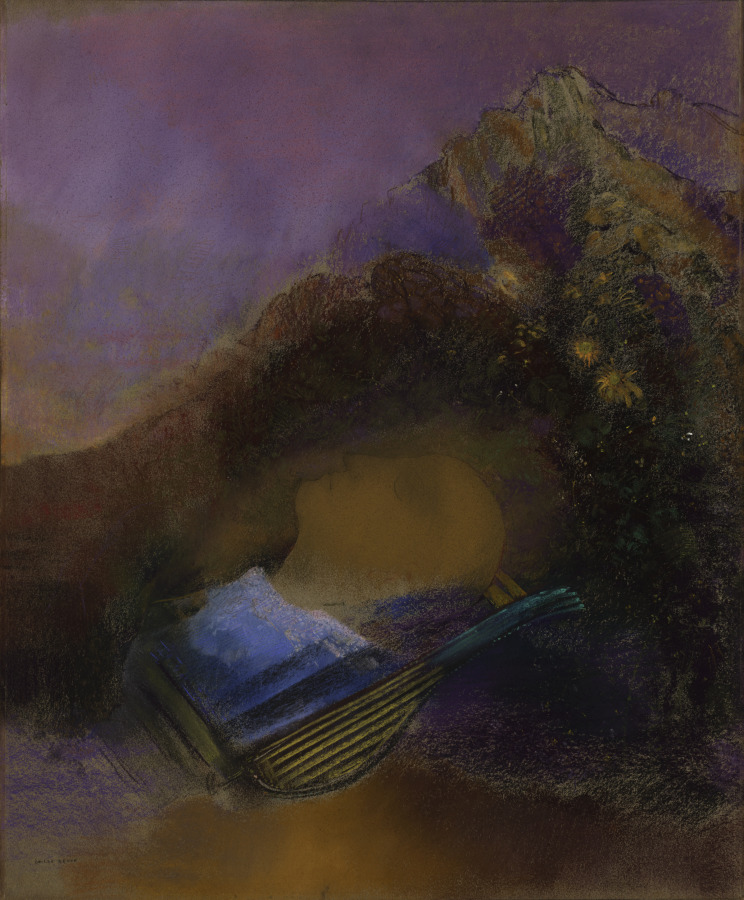 ↗
Orpheus
Odilon Redon
Movement and school labels are interpretive tools. Individual works can cross boundaries, and an artist’s entire career is not assigned to a single movement.