from the 1880s
Dates overlap and vary by place; they are not strict boundaries.
More than dots
Separated colour marks grew from debates about optics and harmony. Artists varied the size and rhythm of marks, so the approach did not produce one mechanically identical surface.
Associations are checked against museum records rather than assigned from dates alone.
Why it emerged
In the 1880s, artists reconsidered Impressionism through contemporary writings on colour and optical perception. Separated touches of pigment promised a more systematic approach to luminosity. Félix Fénéon named Neo-Impressionism in 1886; exhibitions and Signac’s advocacy connected artists across France and Belgium.
Key artists and contributions
Georges Seurat
Combined divided colour with deliberate, monumental arrangements of modern life.
Paul Signac
Developed luminous, mosaic-like surfaces and explained the approach in influential writing.
Henri-Edmond Cross
Expanded divided colour into broader, expressive touches in Mediterranean scenes.
What changed afterwards
Their colour experiments informed younger artists, including Matisse, and contributed to later uses of colour as an independent organising force. The period’s scientific language was important historically, but the paintings should not be treated as laboratory demonstrations of a single optical law.
Sources and further reading
Original educational overview, informed by the resources below. Artist examples are selective; they are not a complete membership list.
Works in this collection
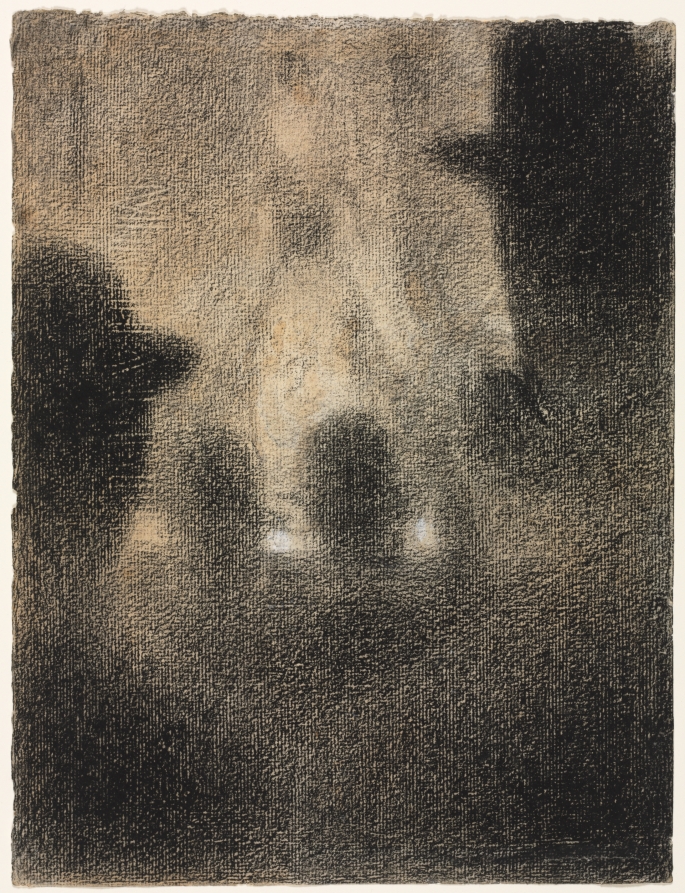 ↗
At the Concert Parisien
Georges Seurat
 ↗
The Promenade (Landscape with Cypresses)
Henri-Edmond Cross
Movement and school labels are interpretive tools. Individual works can cross boundaries, and an artist’s entire career is not assigned to a single movement.