c. 1520–1620
Dates overlap and vary by place; they are not strict boundaries.
Deliberate imbalance
Elongated bodies, unexpected colours and unstable spaces display invention. These effects were often intentional demonstrations of skill, not failures to follow perspective.
Associations are checked against museum records rather than assigned from dates alone.
Why it emerged
After the achievements of Michelangelo and Raphael, some sixteenth-century artists sought distinction through deliberate complexity rather than balanced naturalism. Sophisticated court audiences valued inventive poses, learned references and conspicuous skill. Political and religious instability formed part of this world, but no single crisis explains all Mannerist art.
Key artists and contributions
Pontormo
Made compressed spaces and unusual colour relationships emotionally unsettled.
View artwork at museumReference entry · image not reproducedREPRESENTATIVE WORKPortrait of Cosimo the Elder ↗
1519–20
Uffizi GalleriesBronzino
Turned polished surfaces and controlled poses into a language of Medici court identity.
Parmigianino
Used elongated figures and graceful distortion to display invention.
What changed afterwards
Artists and prints carried these experiments between European courts. Their departures from stable space expanded the repertoire available to later painters; Baroque artists could inherit their theatricality while pursuing different kinds of clarity and emotional address.
Sources and further reading
Original educational overview, informed by the resources below. Artist examples are selective; they are not a complete membership list.
Works in this collection
 ↗
The Great Hercules or 'Knollenman'
Hendrick Goltzius
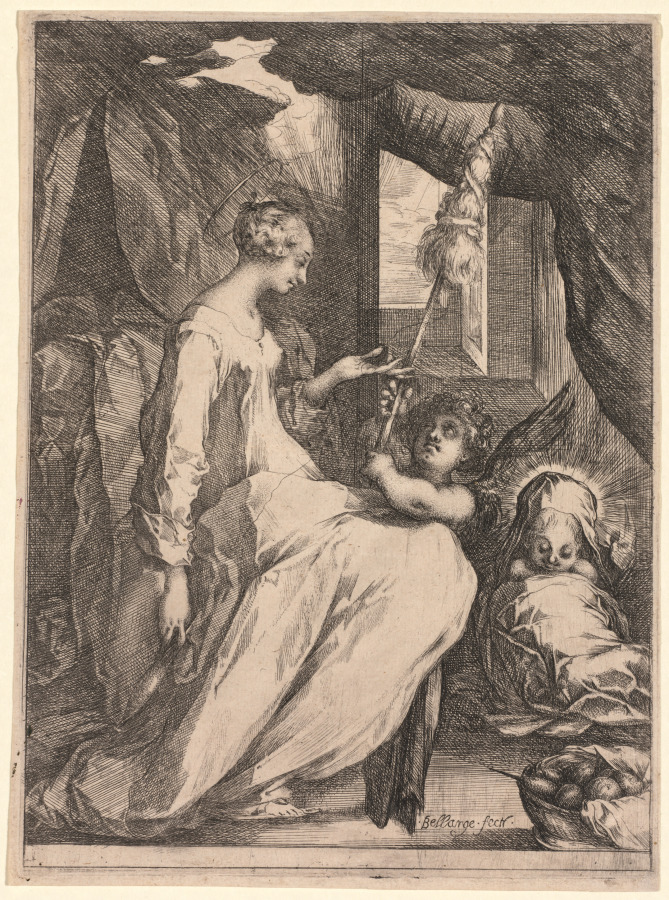 ↗
The Virgin and Child with Distaff and an Angel
Jacques Bellange
Movement and school labels are interpretive tools. Individual works can cross boundaries, and an artist’s entire career is not assigned to a single movement.