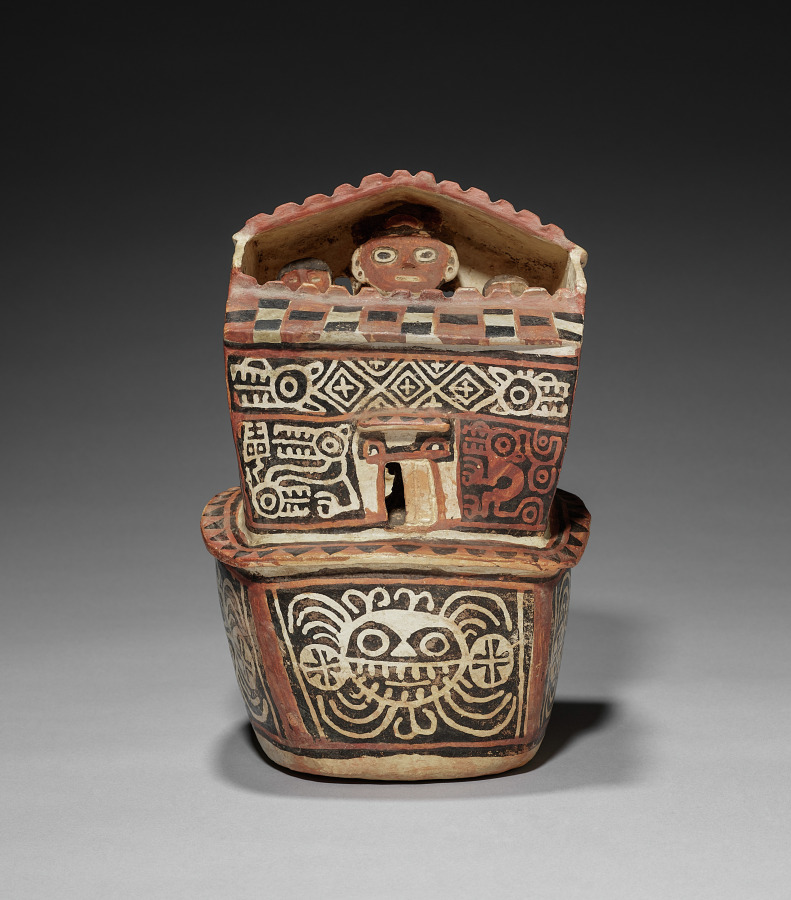
 ↗
Central Andes (Peru), Recuay people · 1–700 CE
Architectural Vessel
Creator not recorded
Andrew R. and Martha Holden Jennings Fund · The Cleveland Museum of Art
Image: public domain (CC0) · Museum record & image source ↗
Creator not recorded by the museum
More than 500 such sculptures—often full figures with elaborate hairstyles and jewelry— have been found in central Nigeria. Named after a discovery site, Nok culture (500 BCE–200 CE or 1500–1 BCE) produced the earliest large figurative artworks in Africa outside of Egypt. Little was known about their social context, as they were first found in mining deposits in the 1920s. Archaeological excavations conducted in the 2000s by a German-Nigerian team suggest that many sculptures were deliberately broken and placed under pavements and in pits, indicating ritual practice. Male-centered art histories presumed men made these figurative sculptures; however, they incorporate building and firing techniques practiced only by women.
Collection text · The Cleveland Museum of Art · CC0Start with what you can see: shapes, surface, colour and scale. How might the listed materials affect the way this object was made and experienced?
Looking prompt · an invitation to observe, not a historical interpretation.↗Creator not recorded
 ↗
Creator not recorded
 ↗
Creator not recorded
 ↗
Creator not recorded