 ↗
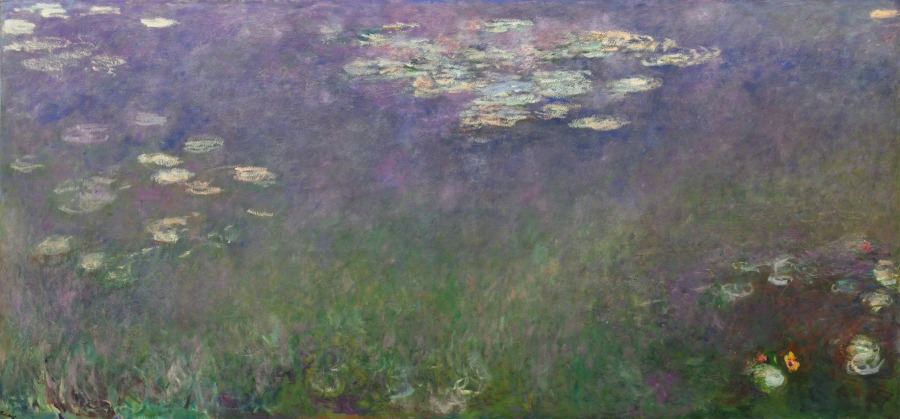
France, late 19th century-early 20th century · c. 1915–26
Water Lilies (Agapanthus)
Claude Monet
#D6D2C6#C5C0B3#E0DBD2#DBD7CC#DED9CF#E4E1D7Estimated from six colour groups in the museum image, including visible paper or borders. Reproduction and lighting affect the result; these are image-area proportions, not pigment measurements.
Delia E. Holden Fund · The Cleveland Museum of Art
Image: public domain (CC0) · Museum record & image source ↗
Together with Dante Gabriel Rossetti and John Everett Millais, William Holman Hunt was one of the founding members in 1848 of the Pre-Raphaelite Brotherhood, a group of young artists who rejected the heavy darkness and idealization of academic history painting, replacing it with meticulously observed, jewel-colored naturalistic detail. This is a study for the figures in the oil painting The Hireling Shepherd, Hunt’s first commercial success. The poses of the couple in the painting are remarkably close to the early study: the shepherd approaches the shepherdess upon his knees, encircling her shoulders with his arm. Devoid of extraneous detail, the study concentrates on the romantic play and erotic tension expressed by the lovers’ intertwined limbs and faces and hands that stop just short of touching.
Collection text · The Cleveland Museum of Art · CC0Start with what you can see: shapes, surface, colour and scale. How might the listed materials affect the way this object was made and experienced?
Looking prompt · an invitation to observe, not a historical interpretation.