 ↗
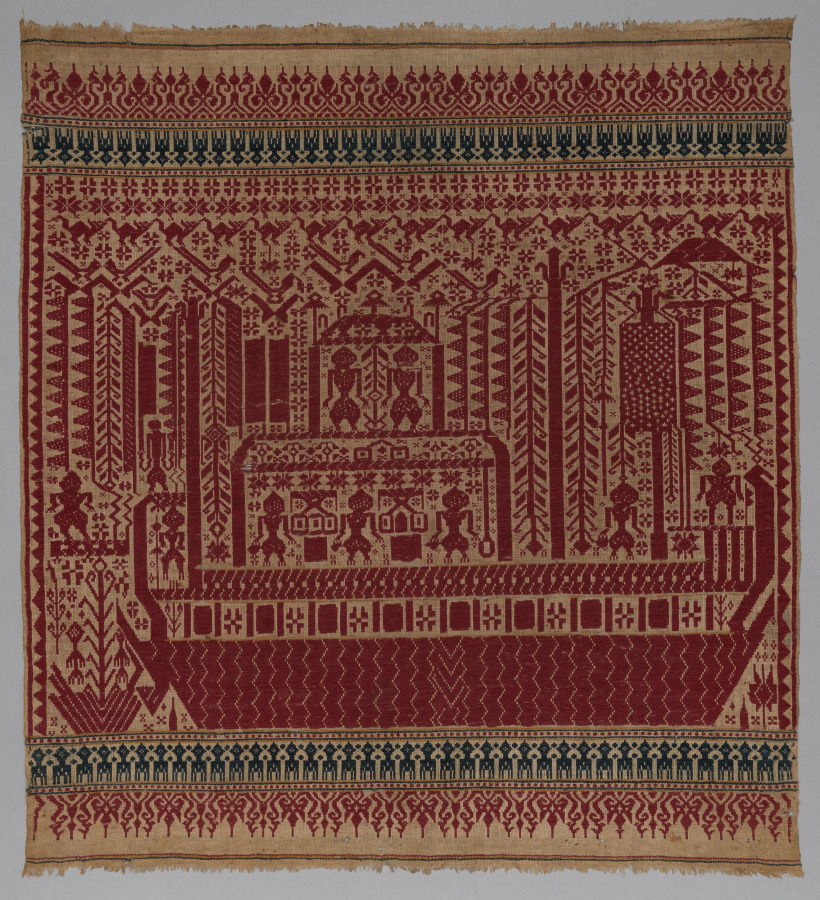
Indonesia, Sumatra, Lampung, 19th century · 1800s
Tampan Pasisir (Ship Cloth)
Creator not recorded
John L. Severance Fund · The Cleveland Museum of Art
Image: public domain (CC0) · Museum record & image source ↗
Creator not recorded by the museum
Images made in India during the Gupta period (AD 300s to 600s) were influential in shaping the early development of Buddhist and Hindu art in Southeast Asia. This gold token depicts the Hindu god Vishnu, identified by the flat-topped crown, his four arms, and attributes: wheel, conch shell, club, and clod of earth. Noteworthy for its naturalism is the foreshortening of his right foot. Such precious gold objects were made to be secreted under a sacred stone icon in Thailand or Cambodia to infuse the temple with wealth and glory.
Collection text · The Cleveland Museum of Art · CC0Start with what you can see: shapes, surface, colour and scale. How might the listed materials affect the way this object was made and experienced?
Looking prompt · an invitation to observe, not a historical interpretation.↗Creator not recorded
 ↗
Creator not recorded
 ↗
Creator not recorded
 ↗
Creator not recorded