 ↗
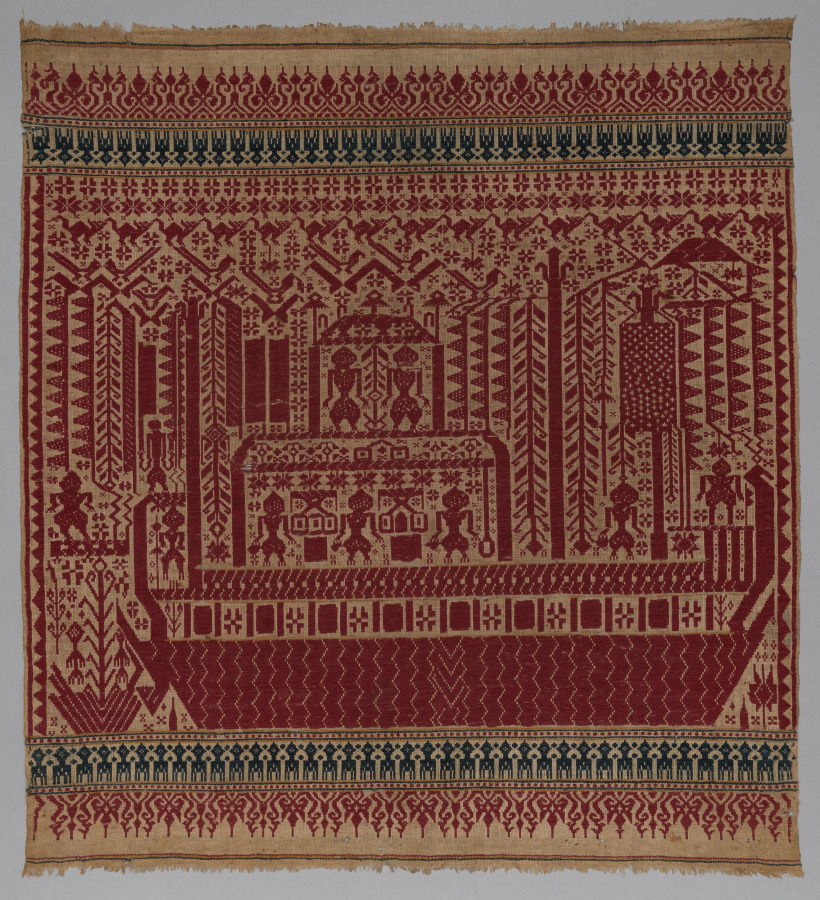
Indonesia, Sumatra, Lampung, 19th century · 1800s
Tampan Pasisir (Ship Cloth)
Creator not recorded
Leonard C. Hanna Jr. Fund · The Cleveland Museum of Art
Image: public domain (CC0) · Museum record & image source ↗
Creator not recorded by the museum
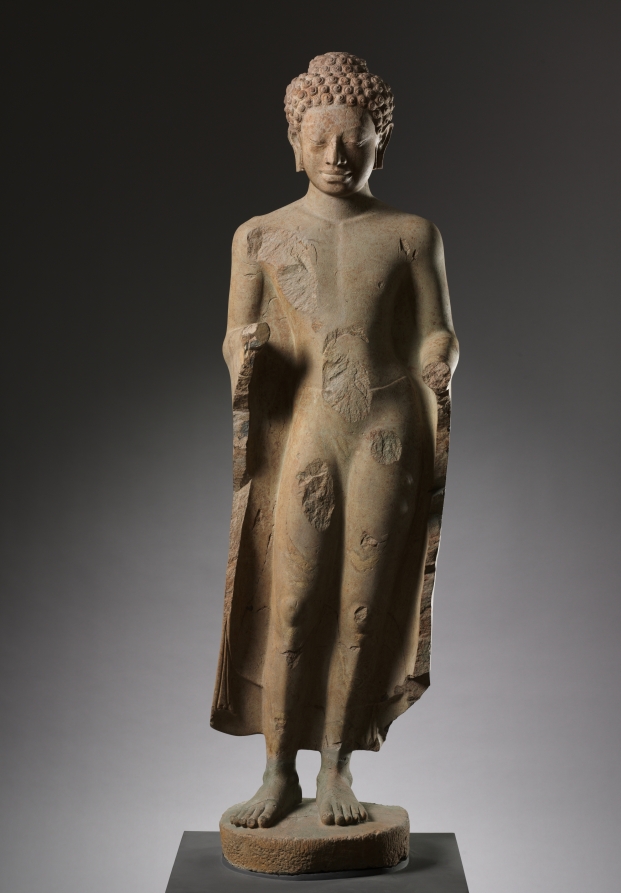
Vishnu has the features of royalty, indicated by the high mitre-like crown with the flat top, distinctive to types made at the site of Prasat Andet. His status as a god, greater than any earthly king, is indicated by the four arms, traces of which are still visible. The sensitive rendering of the eyes and slight smile are characteristics of Cambodian sculpture, and during this early period, the form of the body reveals some relatively naturalistic musculature and treatment of the garments. He wears the Southeast Asian lower garment called sampot, around which his upper garment is loosely tied. It is Vishnu who incarnates himself into the world in avatars, including Krishna and the boar Varaha. Here we see his iconic form as Vishnu himself.
Collection text · The Cleveland Museum of Art · CC0Start with what you can see: shapes, surface, colour and scale. How might the listed materials affect the way this object was made and experienced?
Looking prompt · an invitation to observe, not a historical interpretation.↗Creator not recorded
 ↗
Creator not recorded
 ↗
Creator not recorded
 ↗
Creator not recorded