 ↗
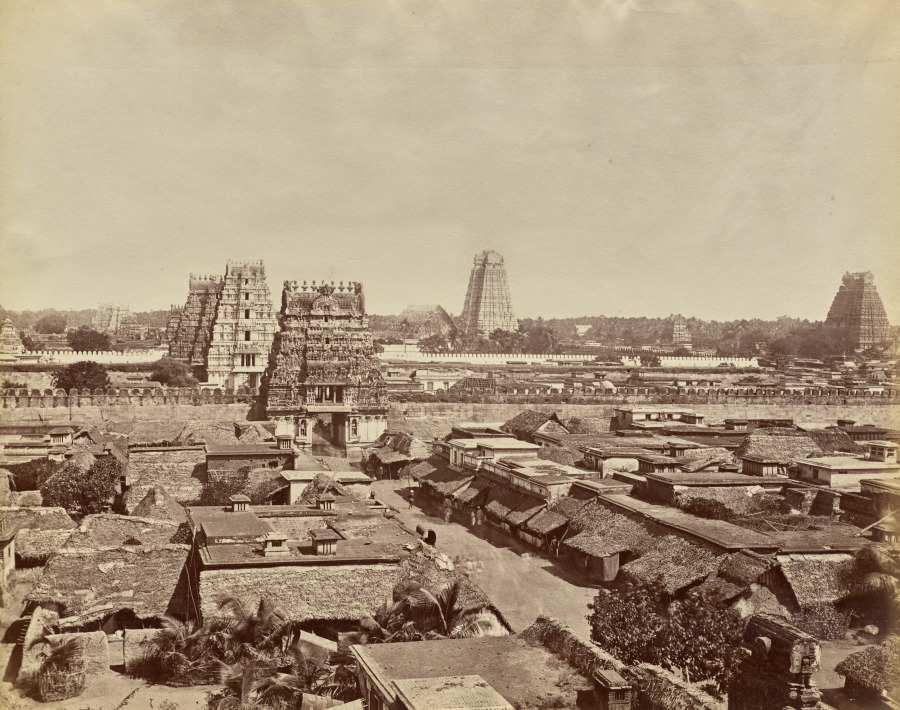
印度 · 1878
从岩顶俯瞰印度特里奇诺波利城镇
尼古拉斯摄影公司
Leonard C. Hanna Jr. Fund · 克利夫兰艺术博物馆
图像:公共领域(CC0)· 博物馆记录与图像来源 ↗
博物馆未记录创作者
This image depicts one of the main bodhisattvas, beings only one stage away from full enlightenment. Because the historical Buddha was a prince prior to his renunciation and life as a wandering ascetic, bodhisattvas are depicted as royal princes. This example has the sharp features, sweet expression, and crisp details characteristic of images made in Nepal during the 1400s. In his upraised right hand Manjushri holds the hilt of a sword that, like wisdom itself, metaphorically cuts through and defeats ignorance. His lower, rear left hand grasps a bow, once probably strung with a wire. Also missing is the arrow that he likely held in his lowered right hand. Arrows were often symbols for mantras, or strings of syllables thought to have the power to focus the mind and work like missiles to destroy negativity and affliction. The gesture of his lowered left hand indicates the transmission of Buddhist teachings. The lotus stem that rises at the left elbows originally held a book of sutras. This figure is in the yogic posture of meditation with the big toe flexed in concentration. Yoga is of central importance in tantric Buddhism, because high-level practitioners are able to discipline the body to such an extent that the mind can also be controlled.
馆藏文字 · 克利夫兰艺术博物馆 · CC0从眼前可见之处开始:形状、表面、色彩与尺度。所列材料可能怎样影响作品的制作方式与观看体验?
观看提示 · 邀请你观察,而非对历史的定论。