 ↗
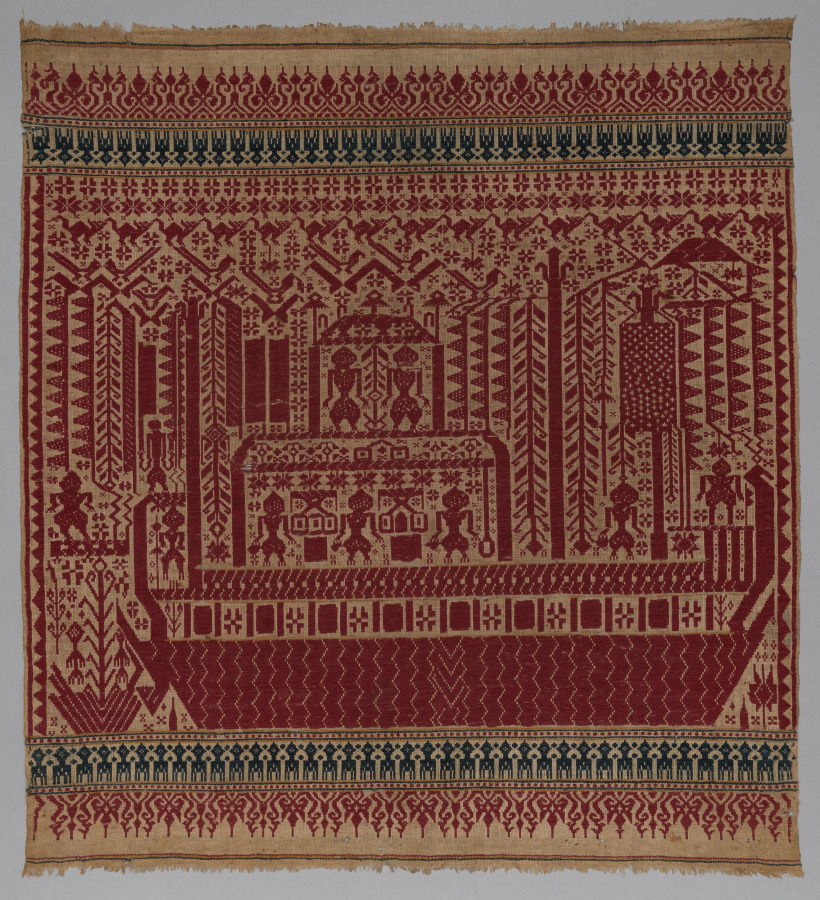
Indonesia, Sumatra, Lampung, 19th century · 19世纪
坦潘沿海船纹织物
创作者未记录
Leonard C. Hanna Jr. Fund · 克利夫兰艺术博物馆
图像:公共领域(CC0)· 博物馆记录与图像来源 ↗
博物馆未记录创作者
This elegant, monumental sculpture is the earliest type of Buddha image to be made in Southeast Asia. It comes from a site in north-central Thailand that was part of the Dvaravati kingdom (500s–1200s). The body shows direct links with the sculptural traditions at Sarnath in northern India on the banks of the Ganges River. The expression of the face has the peaceful introspection that became canonical during the Gupta period of the 5th century in India. The shape of the head and facial features—unlike Indian precursors—suggest that the artists and patrons of Dvaravati made the Buddha resemble the local Mon population. The figure's stance has been rendered with remarkable fluidity, and the abstracted caps of the knees and minimalist modeling of the pelvis lend the figure an otherworldly, transcendent demeanor, balanced by the approachable smiling countenance.
馆藏文字 · 克利夫兰艺术博物馆 · CC0从眼前可见之处开始:形状、表面、色彩与尺度。所列材料可能怎样影响作品的制作方式与观看体验?
观看提示 · 邀请你观察,而非对历史的定论。