 ↗
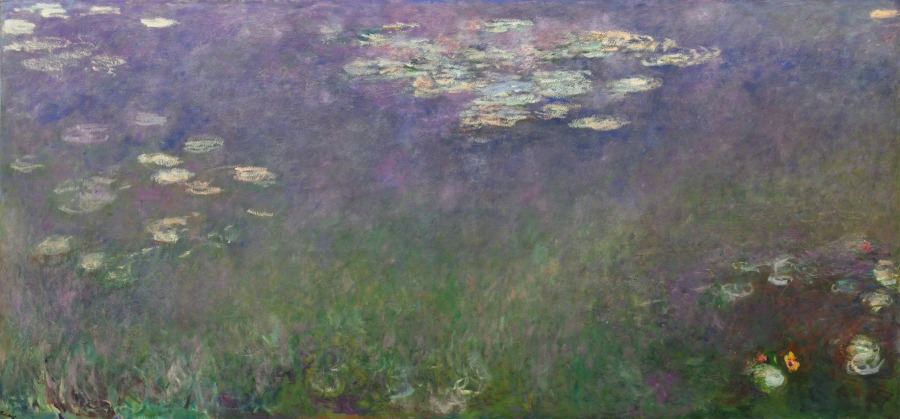
France, late 19th century-early 20th century · 约1915—1926年
睡莲(百子莲)
克洛德·莫奈
#5D483D#A9A58F#DBD8D3#927752#5D7276#CDCBBD根据博物馆图像中的六组色彩估算,包含可见纸张或边框。复制方式和光照会影响结果;这里显示的是图像面积占比,而非颜料用量。
Leonard C. Hanna Jr. Fund · 克利夫兰艺术博物馆
图像:公共领域(CC0)· 博物馆记录与图像来源 ↗
The perfectly round form, called a tondo, became popular during the 1440s, especially in Florence. Made for domestic settings instead of churches, the circular format challenged the artist to create a harmonious, balanced composition within this more difficult shape. The attribution has been a matter of debate. Botticelli often collaborated with students, including Filippino Lippi, who would himself become a significant painter. Few specialists have doubted that Botticelli executed the central passages: the delicate modeling of the faces, the graceful poses, the figures’ profound interiority, and the diaphanous veil are the artist’s hallmarks. However, someone else in Botticelli’s studio probably painted Mary’s blue garment, also the most heavily restored part of the painting.
馆藏文字 · 克利夫兰艺术博物馆 · CC0从眼前可见之处开始:形状、表面、色彩与尺度。所列材料可能怎样影响作品的制作方式与观看体验?
观看提示 · 邀请你观察,而非对历史的定论。